Learn why strong passwords matter and how to instantly generate secure, uncrackable passwords online using a free tool.
In an era where cyber threats and data breaches happen every day, online security starts with one simple thing: a strong password. Using weak passwords like "123456" or your pet's name makes it easy for hackers to compromise your personal accounts, emails, and financial data.
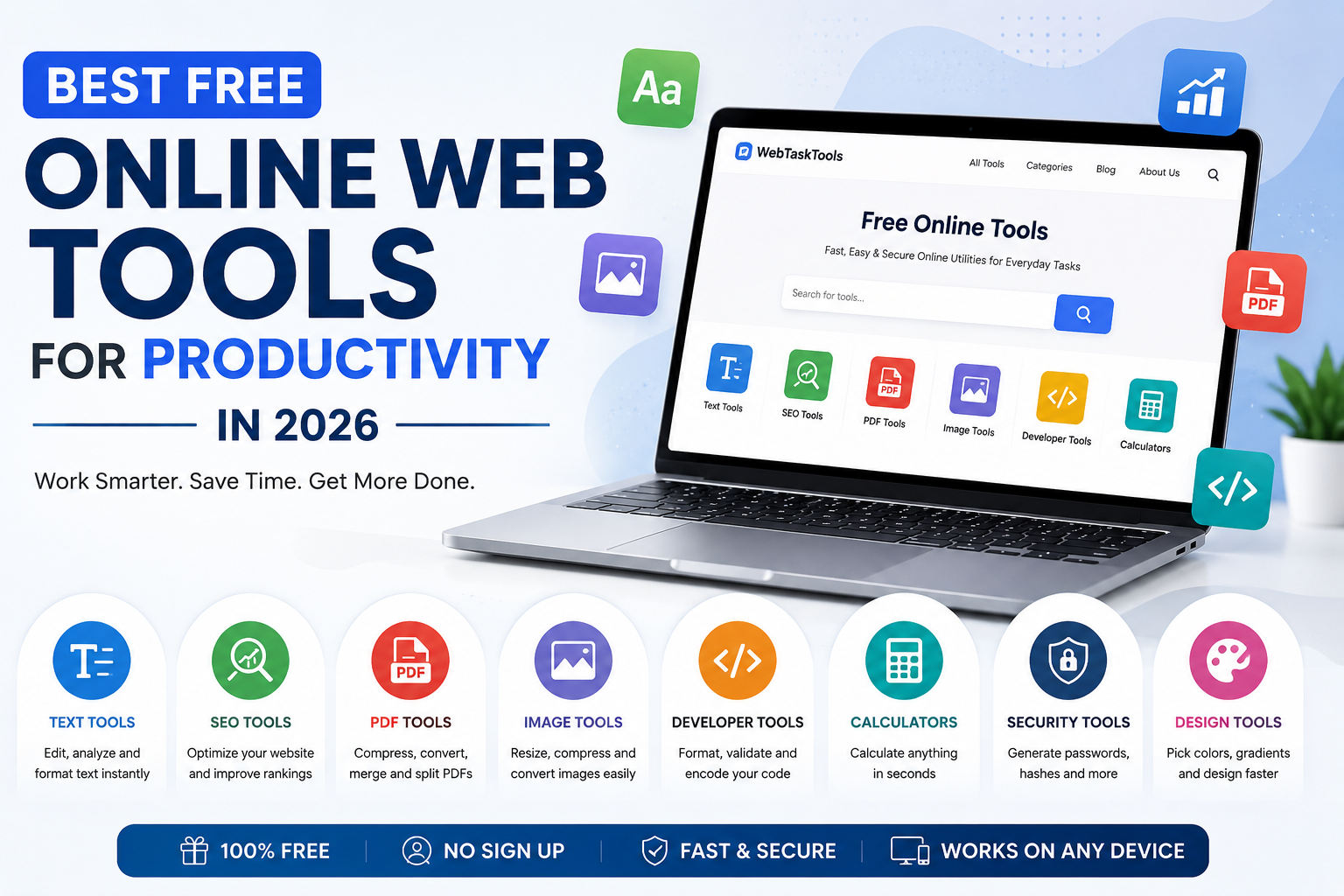
Generate one now: the free password generator creates strong random passwords instantly.
However, coming up with unique, complex passwords for every single website you use can be exhausting. Fortunately, you can instantly create strong, hard-to-guess passwords using a secure online tool.
Why You Need a Strong Password Generator
Creating your own passwords often leads to predictable patterns. A dedicated password generator helps protect you by ensuring:
- Maximum Complexity: Automatically mixes uppercase letters, lowercase letters, numbers, and special symbols.
- Custom Lengths: Allows you to set the exact length you need (e.g., 16 or 32 characters) to meet strict security requirements.
- Total Unpredictability: Removes human habits, creating random strings that resist guessing attacks far better than human-invented passwords (actual resistance depends on length, the hashing used by the site, and the attacker’s resources).
How to Generate a Secure Password in Seconds
Securing your digital life takes only a few clicks:
- Visit WebTaskTools.
- Find and open the Password Generator tool.
- Choose your preferred custom length and settings (symbols, numbers, letters).
- Generate, copy, and secure your account instantly!
Conclusion
Don't leave your online accounts vulnerable to attacks. From generating strong passwords and checking website meta tags to encoding text and converting files,
WebTaskTools provides all the utilities you need under one roof.
Visit our platform today and explore thousands of free tools to streamline your daily tasks securely!
Why Length Beats Cleverness
Password strength is mostly mathematics. Each extra character multiplies the guesses an attacker needs — exponentially. A 16-character random password is not twice as strong as an 8-character one; it is billions of times stronger. This is why "correct horse battery staple"-style passphrases work and why "P@ssw0rd!" does not: attackers long ago learned every human trick (capital first letter, symbol at the end, common substitutions). Randomness plus length is the entire formula; everything else is decoration.
Brute Force, Honestly Explained
You will see claims like "would take millions of years to crack." Treat those as illustrations, not promises: real cracking time depends on the attacker’s hardware, the hashing algorithm protecting the password, and whether the attacker even bothers with brute force. A fast hash on a GPU cluster falls far sooner than a slow, salted hash on the same password. The honest statement is comparative: a long random password resists these attacks enormously better than a human-chosen one — and most real account takeovers never involve brute force at all.
The Attacks That Actually Get You
- Credential stuffing: attackers replay username/password pairs leaked from other breaches. Defense: a unique password per site — the single highest-value habit in this guide.
- Phishing: fake login pages harvest whatever you type. Defense: check URLs, distrust urgent emails, and use a password manager that only fills on the real domain.
- Social engineering: convincing a support agent to reset your account. Defense: minimal personal info shared publicly, strong recovery settings.
- Malware/keyloggers: capturing keystrokes directly. Defense: updated devices and reputable security software.
Notice what none of these care about: how clever your password is. They bypass it entirely — which is why uniqueness (one password per site) and phishing resistance matter more than squeezing extra symbols into a password you reuse everywhere.
Password Managers: The Missing Half
A generator without a manager is a leaky bucket — nobody memorizes forty random passwords. A password manager stores them all behind one strong master passphrase, fills logins automatically (defeating most phishing), and generates fresh passwords on demand. The master passphrase is the one password worth memorizing: long, unique, and backed up securely. Free reputable managers exist; the cost of not using one is measured in breached accounts.
Two-Factor Authentication: The Seatbelt
Even perfect passwords get stolen in breaches. Two-factor authentication (2FA) means a stolen password alone is not enough — the attacker also needs your second factor. Authenticator apps beat SMS codes (SIM-swapping attacks intercept texts); hardware keys beat apps. Enable 2FA on email first (it guards every password reset), then banking, then everything important. It is the highest return-per-minute security action most people have not taken.
Passphrases vs. Random Strings
Two good options: random strings ("x7#Kq9!mV2@...") maximize strength per character and are ideal when a manager stores them; multi-word passphrases ("correct horse battery staple") are memorable enough for the few passwords humans must type (device PINs, the manager’s master passphrase). Both beat human-invented passwords with symbols sprinkled on top. Choose by the job: typed by humans gets passphrases, stored by managers gets random strings.
Frequently Asked Questions
How long should passwords be? Sixteen or more random characters for important accounts; longer where the site allows. Length is the dominant factor.
Should I change passwords regularly? Forced rotation is outdated advice — change on suspicion of breach, and make each password unique so one breach stays contained.
Are online generators safe? Reputable ones generate in your browser using the operating system’s cryptographic randomness and never transmit the result. Prefer tools that work offline after loading, and never generate passwords on a device you do not trust.
One unique password per site, stored in a manager, guarded by two-factor authentication. Unremarkable, unglamorous, and more protective than every clever password trick ever invented.
Entropy in Plain English
Entropy measures password strength in bits — roughly, how many doublings of guessing effort each choice adds. A random lowercase letter adds about 4.7 bits; each additional character multiplies the search space. Sixteen random characters from a 70-symbol set carry around 98 bits of entropy: that is 2^98 combinations, a number with 30 digits. You do not need the math memorized — just the intuition: length dominates, randomness matters, and human patterns ("Summer2026!") collapse entropy because attackers guess patterns first, not characters.
The Breach Reality: Assume Compromise
Major breaches expose billions of credentials yearly, and attackers automate the rest: stolen passwords get replayed across thousands of sites within hours (credential stuffing at scale). This is why uniqueness beats complexity in practice. A 12-character random password reused on ten sites is weaker, in real-world terms, than a 16-character random password used once — because the reused one dies with the first breached site. Check whether your email appears in known breach compilations periodically; when it does, change that password everywhere it was reused (ideally: it was not reused anywhere).
The 20-Minute Password Audit
Do this today: one, list your most important accounts (email, banking, primary social, cloud storage, password manager). Two: confirm each has a unique password — generate fresh ones for any that share. Three: enable two-factor authentication on each, starting with email. Four: check breach-exposure for your main addresses. Five: write down your recovery options (backup codes stored somewhere safe, not in email). Twenty minutes, and your security posture jumps past the vast majority of internet users — not because the steps are advanced, but because almost nobody does them.
Passwords for Families and Teams
Shared accounts are a reality: streaming services, household utilities, small-team tools. The rules: share through the password manager’s sharing feature (never screenshots or chat messages), give each person their own login where the service allows it, and rotate shared passwords when someone leaves the circle. For kids’ accounts, parents holding the credentials in a manager beats sticky notes and memorized birthdays by every measure. Security that ignores how people actually live gets bypassed; design for reality.
What to Do When an Account Is Breached
- Contain: change the password immediately, from a clean device, to a fresh generated one.
- Check siblings: anywhere that password was reused gets a new unique password too.
- Review sessions: log out all devices/sessions in the account’s security settings.
- Enable 2FA if it was not on — the breach is the reminder.
- Watch: monitor the email for password-reset attempts and phishing follow-ups in the coming weeks.
Biometrics and the Passwordless Future
Fingerprints, face unlock, and passkeys are shifting the landscape: device-bound biometrics plus cryptographic passkeys remove the shared-secret problem entirely — there is no password to phish or breach. Adoption is underway but uneven, so passwords remain essential for years. The smart posture: use passkeys where offered, keep the password-manager discipline everywhere else, and treat biometrics as a convenient lock on the device rather than a replacement for account-level security. The future is passwordless; the present still needs good passwords.
Myths That Refuse to Die
- "Complexity requirements make passwords strong." Forced symbols mostly produce "Password1!" — predictable. Length plus randomness wins.
- "Changing every 90 days helps." It produces "Summer2026!" → "Autumn2026!" — change on breach suspicion, not on schedule.
- "Only important accounts need strong passwords." Attackers pivot from weak accounts (password resets flow through email). Every account matters.
- "I have nothing worth hacking." Your email resets everything else you own. You are worth exactly as much as your inbox.
Choosing and Setting Up a Password Manager
The manager decision paralyzes people; simplify it. Any reputable manager beats none — pick one with a long track record, independent security audits, and apps for your devices. Setup in order: install on your primary devices, create the account with a long memorable master passphrase, import or manually add your top twenty accounts with fresh generated passwords, enable 2FA on the manager itself, and store the recovery kit somewhere safe offline. Then make it the path of least resistance: browser extension installed, autofill enabled, generator one click away. A manager you fight will be abandoned; configure until it is invisible.
Teaching Security Without Fear
Scare tactics produce avoidance; agency produces action. When helping family or colleagues, frame security as empowerment: "here is how you never get locked out," not "hackers are coming for you." Do the 20-minute audit together once, celebrate the green checkmarks, and leave them with exactly three habits: unique passwords via the manager, 2FA on email, and pausing before clicking urgent links. Three habits, internalized, outperform a hundred warnings ignored.
The One-Page Security Setup (Tear-Off Summary)
If this guide were a fridge magnet: generate a unique 16+ character password for every account and store them in a reputable manager; protect the manager with a long memorable master passphrase plus two-factor authentication; enable 2FA on email first, then banking, then everything important; check breach exposure for your addresses yearly; never share passwords in chat or screenshots; pause and verify before acting on urgent messages. Six lines. Everything else in this guide is elaboration — valuable elaboration, but elaboration. Do the six lines and you are done with the large majority of personal account security.
Staying Current Without Obsessing
Security advice evolves: new attack techniques, new breach disclosures, new best practices. The sustainable habit is light: follow one reputable security news source, act on breach notifications affecting you within a day, and re-run the 20-minute audit yearly. Ignore the hype cycle — most "revolutionary" threats never reach ordinary users, while the basics (unique passwords, 2FA, phishing caution) stop the attacks that actually arrive. Consistency at the fundamentals beats anxiety about the exotic, every single year.
Realistic Expectations: What Security Can and Cannot Do
Perfect security does not exist — the goal is making attacks expensive and unlikely, not impossible. The practices in this guide move you from "easy target" to "not worth the effort," which defeats the overwhelming majority of real attacks (automated, opportunistic, credential-stuffing at scale). Targeted attacks by determined professionals are a different game requiring different defenses. For personal and small-business accounts, the fundamentals here are the entire practical playbook — implement them fully before worrying about anything exotic.
Start with the single highest-leverage action: open your email account settings right now and enable two-factor authentication. Everything else can follow this week — but the email account guards every password reset you own, so it goes first, today, before you close this tab.
Then generate one fresh password — just one — for the account you care about most, and store it properly. Momentum beats perfection: one secured account today becomes ten by month’s end.