What is Lorem Ipsum and why does everyone use it? A practical guide to placeholder text, its 2,000-year history, and when (not) to use it.
Lorem ipsum dolor sit amet, consectetur adipiscing elit… — you have seen this strange almost-Latin text everywhere: in website mockups, app prototypes, and print layouts. But what actually is Lorem Ipsum, where did it come from, and why do designers still use it after 500 years? This guide answers all of it.
Generate placeholder text instantly: the free Lorem Ipsum generator creates any amount you need.
What Is Lorem Ipsum?
Lorem Ipsum is placeholder text — dummy content used to fill a layout so designers can focus on visual design without being distracted by meaningful words. It looks like Latin, and roughly half of it is: the words are scrambled fragments of a real classical text, rearranged so they carry no coherent meaning.
A 2,000-Year-Old Origin Story
The text comes from De finibus bonorum et malorum (On the Ends of Good and Evil), written by the Roman philosopher Cicero in 45 BC. The famous opening — Lorem ipsum dolor sit amet — is a garbled version of Dolorem ipsum quia dolor sit amet (“pain itself, because pain sits within love…”).
It entered the design world in the 1960s, when the Letraset company included passages of it on their dry-transfer lettering sheets, and it exploded with desktop publishing in the 1980s. When the web arrived, Lorem Ipsum came along — and never left.
Why Designers Still Use It
- It keeps the focus on design. Real, readable text pulls reviewers into editing words instead of judging layout, spacing, and typography.
- It mimics real text rhythm. Unlike repeating “test test test,” Lorem Ipsum has natural-looking word lengths and sentence variation, so layouts preview realistically.
- It is language-neutral. Because it means nothing, it does not bias test audiences toward any message.
- Everyone recognizes it. Clients and developers instantly understand that the text is temporary.
When You Should NOT Use Lorem Ipsum
Placeholder text is a design tool, not a content strategy. Avoid it when:
- Testing readability or UX — users cannot evaluate content they cannot read. Use realistic draft copy instead.
- Presenting to non-designers — some clients find it confusing or unprofessional; a short plain-English draft often works better.
- The text might ship — an alarming amount of Lorem Ipsum has accidentally gone live on real websites. Always do a final content check.
How Much Lorem Ipsum Do You Need?
Different mockups need different amounts of filler:
- A headline mockup: one short sentence (8-12 words)
- A paragraph block: 50-70 words
- A full article layout: 300-500 words across several paragraphs
- A multi-page prototype: generate a few thousand words and split as needed
Generate Lorem Ipsum Free in Seconds
Need placeholder text right now? The free Lorem Ipsum generator creates as many words, sentences, or paragraphs as you need — instantly, in your browser, no signup. You will also find it alongside dozens of other utilities in the text tools collection, from word counters to case converters.
Fun Alternatives to Classic Lorem Ipsum
If the classics feel stale, the design community has created playful variants: Cupcake Ipsum (dessert words), Hipster Ipsum, Zombie Ipsum, and even Legal Ipsum. They work exactly the same way — they are just more fun in internal mockups. For client-facing work, stick with the classic.
Final Thoughts
Lorem Ipsum has survived from Cicero's Rome to modern web design for one simple reason: it works. It lets layout shine without words getting in the way. Just remember its limits — use it for design, replace it with real content before launch, and always double-check that none of it slips into production. Your future self will thank you.
A Brief, Honest History
The text comes from Cicero’s "De finibus bonorum et malorum" (45 BC), scrambled through centuries of typesetting — popularized in the 1960s by Letraset transfer sheets and later by desktop publishing software. The words are real Latin-ish fragments; the meaning is deliberately destroyed. That destruction is the point: readable enough to simulate text flow, meaningless enough that nobody reads it. Five centuries of designers cannot be wrong about its utility.
Why Designers Still Reach for It
A layout must be judged on form before content exists. Real draft copy gets read — and then critiqued — derailing the design review into an editing session. Lorem ipsum keeps eyes on spacing, hierarchy, and rhythm where they belong. It is not laziness; it is separation of concerns. Design the container with neutral filler; pour in the real words when they are ready. Every experienced designer has the war story of the client who approved "final" copy that was never final — filler prevents exactly that.
How Much Filler: Practical Amounts
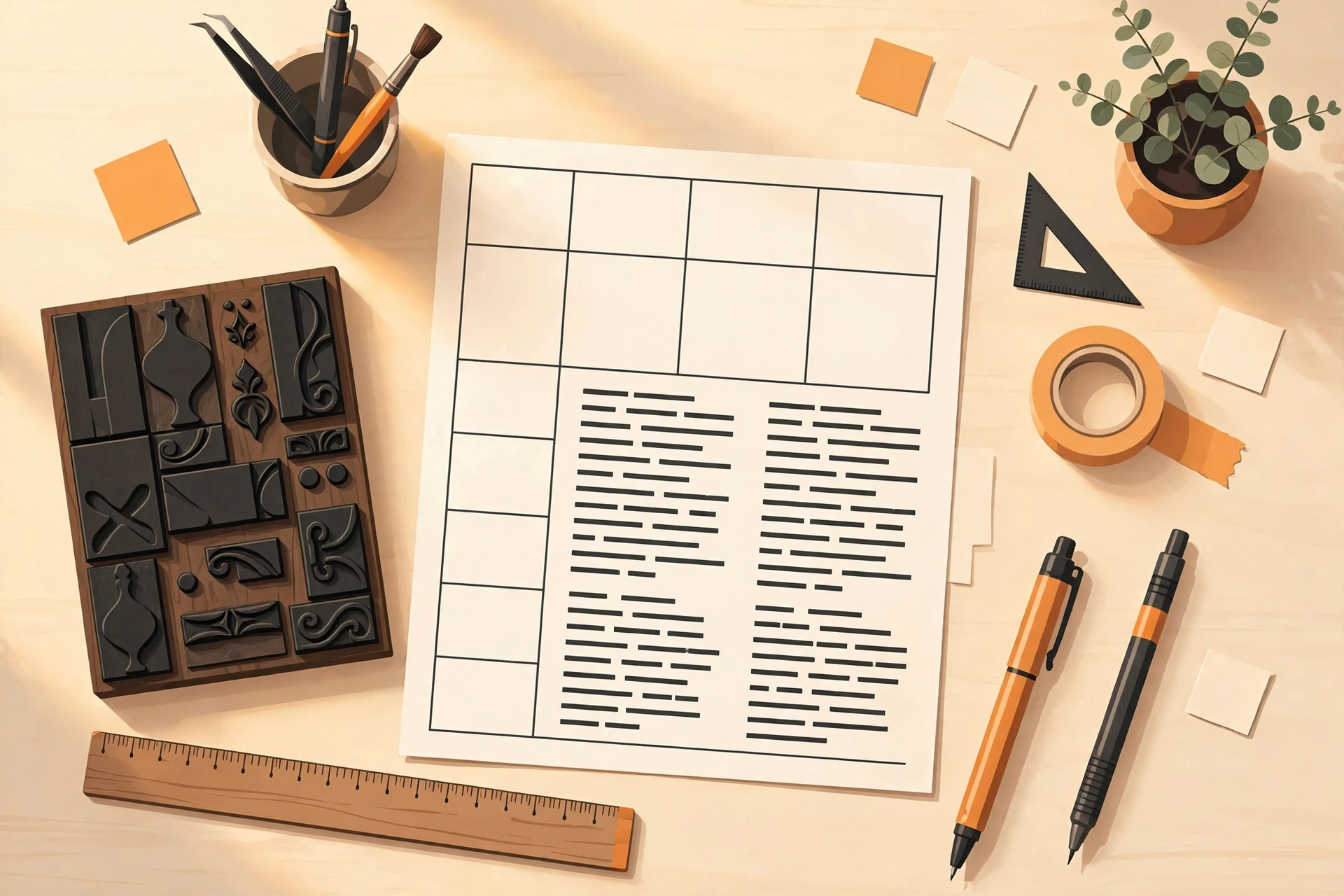
Match the filler to the real content’s shape: a headline mockup needs one short sentence; a paragraph block needs a realistic paragraph; a full article layout needs several paragraphs with subheadings. The common failure is too little filler — three lines standing in for what will be thirty, hiding the real layout problems until launch. When in doubt, generate slightly more than you expect; overflow reveals design weaknesses that exact-fit filler conceals.
Lorem Ipsum vs. Real Draft Copy
The honest debate: filler keeps reviews focused on design; real draft copy reveals content problems early. The pragmatic answer is staged — filler for early layout exploration, real (even rough) copy for later refinement. Neither extreme serves: permanent filler ships embarrassing Latin to production, while premature real copy invites endless word debates during wireframe reviews. Know which stage you are in, and choose accordingly.
For Developers: Filler in Code and Tests
Developers meet lorem ipsum in templates, CMS themes, and test fixtures. Practical rules: never let filler reach production (add a pre-deploy check or a test that fails on its presence), use realistic amounts in tests (pagination bugs hide behind three-item lists), and prefer clearly-marked test data so nobody mistakes it for content. The generator beats typing "asdf" repeatedly — realistic filler catches layout issues that keyboard-mashing never will.
The Alternatives Worth Knowing
- Real draft copy: best for late-stage design; reveals actual content problems.
- Structured gibberish: "content content content" — uglier, but unmistakably temporary.
- Competitor text (never): copying real published text as filler risks it shipping — and it is someone else’s work.
- AI-generated drafts: increasingly popular; just label them clearly as drafts.
- Client-provided roughs: ideal when available; the client’s own words, however unfinished.
Common Mistakes
Shipping it: the cardinal sin — always grep before launch. Wrong amounts: filler that hides the real content’s shape. Forgetting non-Latin scripts: if the final site supports other languages, test with real samples of those scripts — Latin filler proves nothing about them. Using it in user testing: participants cannot evaluate content they cannot read; use realistic drafts for usability tests.
Generating It Well
Use a proper Lorem Ipsum generator rather than copy-pasting the same paragraph everywhere: vary the amounts per block, generate enough to stress-test the layout, and refresh it between reviews so nobody starts "reading" it. The tool exists because designers need this constantly — bookmark it next to your mockup tools and stop hunting for that one paragraph you always copy.
Frequently Asked Questions
What does Lorem Ipsum actually say? Nothing — it is scrambled Latin fragments, deliberately meaningless. Anyone claiming a translation is inventing it.
Is it unprofessional to use? No — it is the industry standard for layout-stage filler. Shipping it to production is the unprofessional part.
How much should I generate? Match the expected real content’s shape, erring slightly generous to expose layout weaknesses.
Are there better alternatives? For late-stage design, real draft copy wins. For early layout, nothing beats the neutral classic.
"Design the container with neutral filler; pour in the real words when they are ready."
The Designer’s Checklist
Filler generated in realistic amounts. Reviews kept on design, not words. Staged transition to real copy planned. Pre-launch grep for stray Latin scheduled. Non-Latin scripts tested with real samples where needed. Five checks, and the humble placeholder does its job — invisibly, as it should. The best filler is the filler nobody remembers, because the design it shaped is what everyone notices.
Typography Reviews and Filler
Filler text is also a typography tool: realistic paragraph lengths reveal whether line length, leading, and measure actually work. Set the filler in the real typeface at real sizes and read the gray — squint at the page and judge the texture. Even, calm gray means the typography works; blotchy, restless gray means something is off. This "squint test" is easier with meaningless text, because readable copy keeps pulling your eyes into reading instead of seeing.
Talking to Clients About Filler
Clients often react to lorem ipsum with confusion ("is this the text?") or, worse, approval of words that will never ship. Preempt both: label filler clearly in presentations ("placeholder text — final copy in progress"), explain its purpose in one sentence, and never let a review end with filler mistaken for content. The one-sentence explanation — "this lets us judge the design before the words are ready" — prevents nearly every filler-related misunderstanding.
Accessibility: The Filler Blind Spot
Screen readers read whatever is there — including lorem ipsum shipped to production. Beyond the embarrassment, filler in production is an accessibility failure: meaningless text read aloud to users who cannot skim past it. The pre-launch grep is therefore an accessibility check too. During development, mark filler regions clearly so testers using assistive technology know what they are encountering. Real content deserves real testing; filler deserves quarantine.
The Deeper History (For the Curious)
The standard passage traces to a 1914 Loeb Classical Library edition of "De finibus," via the typesetter who scrambled it — and Richard McClintock’s famous detective work identifying the source. The words discuss pleasure and pain in philosophy; the scrambled version discusses nothing, beautifully. Knowing the story will not improve your layouts, but it makes excellent conversation at design conferences — and reminds us that today’s throwaway tools often have remarkable pasts.
Filler Across Media
Print designers inherited lorem ipsum from the letterpress era; web designers adopted it for mockups; app designers use it for interface copy; video editors use visual equivalents (placeholder graphics, temp music). The principle is universal: separate the container’s design from the content’s creation, and use neutral stand-ins at the boundary. Whatever your medium, the neutral placeholder is doing the same job — holding space for meaning that has not arrived yet.
Your Filler Workflow
Bookmark the generator. For each new mockup: generate realistic amounts per block, vary between sections, label clearly for clients, plan the transition to real copy, and schedule the pre-launch grep. Five steps, two minutes, and the oldest trick in design keeps working exactly as it has for half a millennium — quietly holding the space where meaning will go.
Final Thought: The Humility of Filler
There is something quietly admirable about a tool whose entire purpose is to be replaced. Lorem ipsum holds the space, shapes the design, and then gracefully exits before launch — asking for no credit. Good designers treat it with corresponding respect: use it well, label it clearly, and remove it completely. The placeholder that knows its place is the placeholder that does its job. Generate what you need, design with confidence, and ship with real words.
Quick Reference
Early layout: lorem ipsum, realistic amounts, client-labeled. Late design: real draft copy. Development: realistic fixtures, never shipped. Pre-launch: grep for stray Latin. The whole discipline on a sticky note — and five centuries of designers nodding in approval.
Open the generator, fill your next mockup properly, and give the oldest design tool in the book the competent use it deserves.
Appendix: Filler Amounts Cheat Sheet
Headline: 1 short sentence. Subheading: 1-2 sentences. Paragraph: 3-6 sentences. Article section: 3-5 paragraphs. Card grid: 2-3 lines per card. Hero: headline plus 1-2 sentence subtext. Generate per block, vary between sections, and refresh between review rounds. Print this, tape it to the monitor, and never under-fill a mockup again.
The placeholder holds the space; your design fills it with meaning. That division of labor has worked for centuries — trust it.
Design boldly; fill wisely.